Selecting the correct diesel generator size is one of the most critical pre-purchase decisions for facility managers, plant engineers, and procurement teams. Under-sizing a unit leads to frequent overloads, voltage dips, and unexpected shutdowns. Conversely, over-sizing results in unnecessary capital expenditure and long-term operational issues like wet stacking.
Before buying a diesel generator, you need a precise estimation of your facility’s electrical demand. This practical guide walks you through how to calculate generator capacity step-by-step to ensure long-term energy security.
Step 1: Understand kW vs. kVA
Before listing your electrical loads, it is essential to distinguish between Kilowatts (kW) and Kilovolt-Amperes (kVA):
- kW (Real Power): The actual power consumed by equipment to perform working tasks.
- kVA (Apparent Power): The total power supplied to the system, accounting for non-working reactive current.
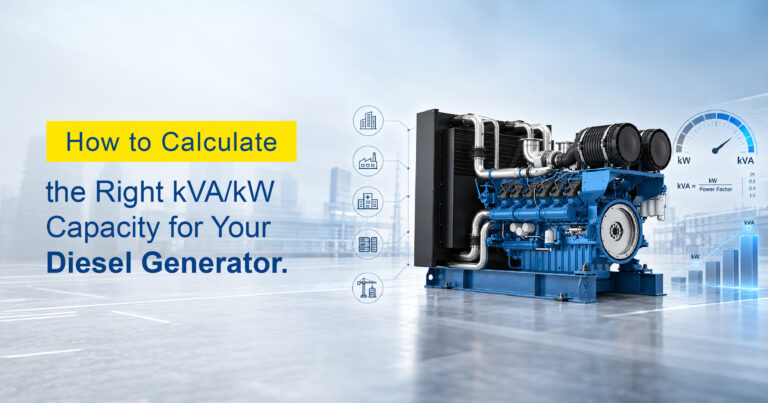
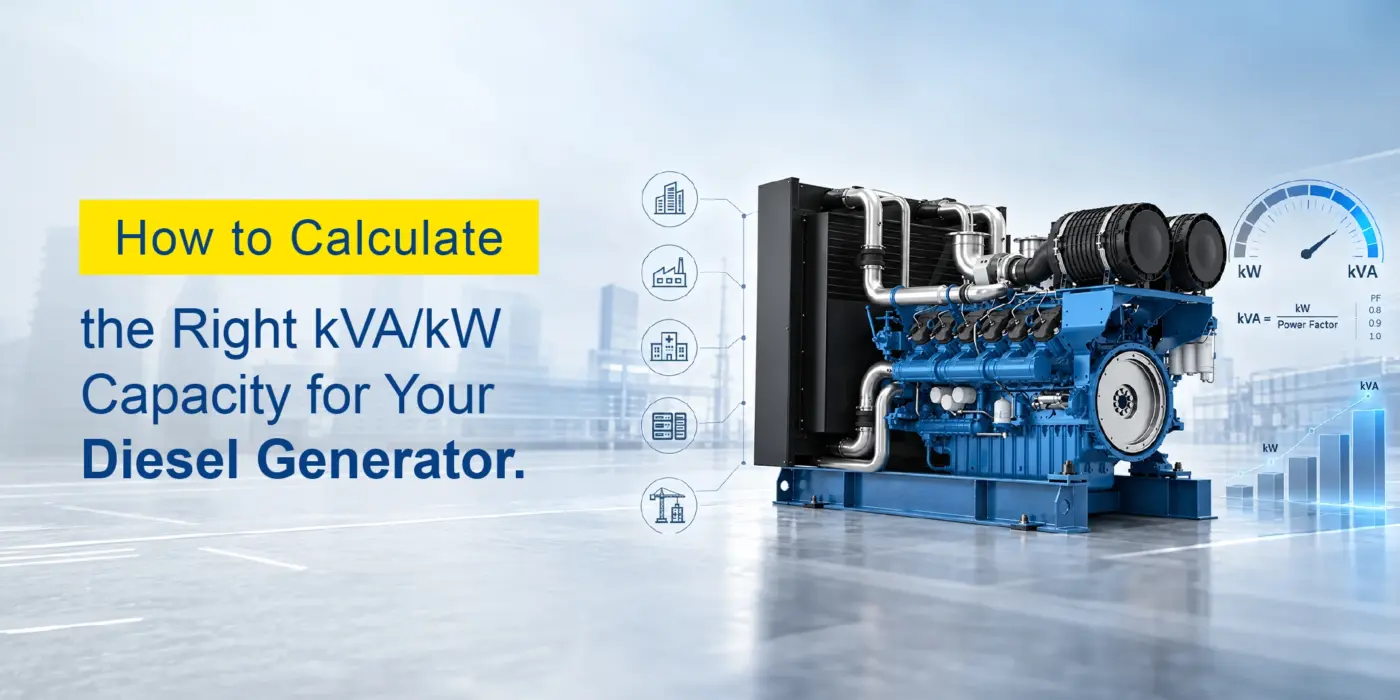
In industrial applications, the standard power factor (PF) for three-phase diesel generators is 0.8. The relationship between kW and kVA is expressed using this conversion formula:
kW = kVA × 0.8
For example, if your total required working power is 400 kW, the required capacity of a generator is 400 ÷ 0.8 = 500 kVA.
Step 2: List and Total Your Facility’s Electrical Loads
To determine the true capacity of a generator, audit every piece of equipment intended to run during a power outage. Divide these loads into two distinct categories:
- Running Loads (Continuous Demand): Resistive loads such as LED lighting, server racks, heaters, and basic electronics that draw constant power.
- Starting Loads (Surge Demand): Inductive loads powered by electric motors, such as HVAC compressors, water pumps, chillers, and elevators, that require 3 to 7 times their rated running current for a few seconds during startup.
Gather the rated running amps (A), voltage (V), and power factor for each asset from its nameplate.
Step 3: Apply the Load Calculation Formula
When evaluating how to calculate generator capacity, follow this standard formula to ensure your power system handles both starting surges and continuous operating loads:
Total Running kW = Σ(EquipmentRunningAmps × Voltage × 1.732 × Power Factor) / 1000
Once you have your total running kW:
- Identify the single largest motor in your system and calculate its additional starting surge kW.
- Add the peak starting surge kW to your total running kW.
- Convert total peak kW to kVA by dividing by 0.8.
- Add a 20% safety margin to allow for future load growth and prevent continuous full-load operation.
Step 4: Worked Example for an Industrial Facility
Let us apply this formula to size a standby power system for a manufacturing unit:
- Baseline Running Load: 240 kW (Lighting, office equipment, conveyor belts)
- Largest Single Motor: A 75 HP pump motor drawing 60 kW running power, requiring a 180 kW starting surge (3x multiplier).
Step-by-Step Calculation:
- Total Peak Demand: 240kW(Base) + 180kW(MotorSurge) = 420kW
- Convert to kVA: 420kW ÷ 0.8PF = 525kVA
- Add 20% Safety Buffer: 525kVA × 1.20 = 630kVA
In this scenario, a standard 650 kVA generator set is the ideal choice to handle peak startup demand smoothly while maintaining healthy running conditions.
Common Sizing Mistakes to Avoid
- Ignoring Motor Inrush Current: Sizing a unit solely on running power will trip the generator breaker every time heavy machinery starts up.
- Over-Sizing Beyond 30% Buffer: Running a generator capacity consistently below 30–40% of its prime rating causes unburnt fuel to accumulate in the exhaust system (wet stacking), causing severe engine damage.
- Overlooking Harmonic Distortion: Non-linear loads like variable frequency drives (VFDs), UPS systems, and computers generate harmonics that require derating the alternator.
Partnering with Reliable Power Experts
Once you establish the required capacity of a generator, selecting an engine built for high block-load acceptance and long-term durability is critical. Advanced heavy-duty diesel engines engineered by premier diesel engine manufacturers in India deliver optimum fuel efficiency, low vibration, and superior transient response during sudden load demands.
Whether you need a compact power unit or a high-horsepower diesel engine for generator applications, exploring a comprehensive industrial diesel generator guide will help ensure your facility gets the exact power density it demands.
By calculating the precise capacity of DG set installations in advance, procurement teams avoid costly retrofit work and secure uninterrupted productivity for years to come.